
Күн энергиясымен жұмыс істейтін FRP жолағы: модульдеріңізді қорғайтын қауіпсіз шатырға кіру
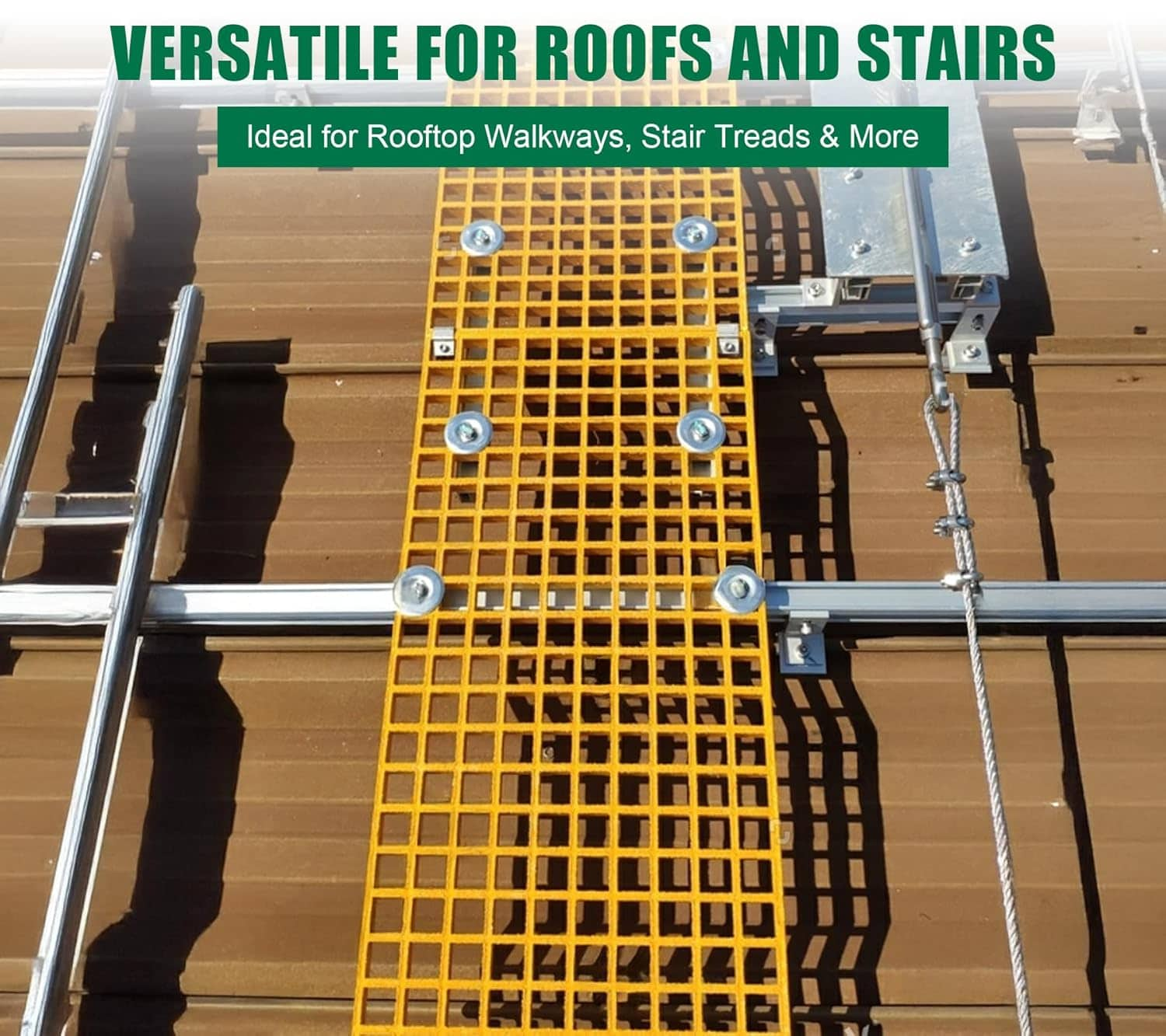
Every commercial solar array has the same hidden cost: someone has to walk on it. Cleaning, thermographic inspection, string testing and inverter checks all put technicians on the roof, and on a flat array the shortest path is usually across the modules. A solar FRP walkway changes that path. It gives the maintenance team a defined, anti-slip route that keeps boots, tools and cable drums off the glass, and it does it with a material that will not rust, conduct or need repainting.
Why a Solar Array Needs a Walkway at All
A photovoltaic module is a sandwich of glass, encapsulant and cells. It carries snow and wind load across its whole surface, but it is not designed for a point load from a knee or a tool bag. Walking on modules causes micro-cracks that are invisible from the ground and show up years later as hot spots and lost yield. A walkway removes that risk by giving people somewhere else to step, while also protecting the roof membrane underneath and marking a safe route for anyone who visits the site.
What an FRP Walkway Is Made Of
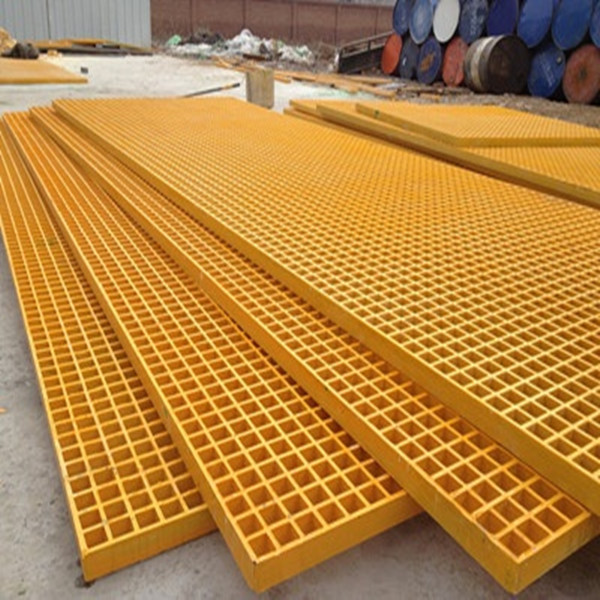
FRP means fibreglass-reinforced plastic, also called GRP. The walkway is usually a moulded or pultruded grating panel with an anti-slip top surface, supported on profiles and fixed with clips. Compared with galvanised steel, FRP is much lighter, so a two-person team can carry and position panels without lifting equipment. It does not corrode in coastal or industrial air, it does not conduct electricity, and it needs no painting or galvanising touch-up after cutting.
Where FRP Walkways Fit on a Solar Site
The most common location is a flat commercial roof, where a walkway runs between array rows or along the parapet to reach inverters, combiner boxes and roof hatches. On solar carports the same panels form a safe route across the canopy. On ground-mount farms, walkways bridge cable trenches and give access to string combiner stations without walking on the soil or the cable route. Around inverter and transformer platforms they double as a clean, non-conductive standing surface.
Choosing the Right FRP Walkway
Four decisions matter.
1.the grating type: moulded grating gives a slip-resistant surface in every direction, while pultruded grating is stiffer for longer spans.
2.the mesh size, which should be small enough that tools and boots do not catch.
3.the load rating and support spacing, which must match the walkway span and the number of people expected on it.
4.the fixing method, because clips and brackets should not puncture the roof membrane or create a thermal bridge. Ask the supplier for the load table, the resin type and the UV stabilisation in writing, and confirm the fire performance required by your local code.
Installation Details That Prevent Call-Backs
Keep the walkway slightly above the roof surface so water drains and debris does not collect. Leave expansion gaps at panel joints, because FRP moves with temperature just like aluminium rails. Use stainless or FRP clips rather than mixed metals, and never drill through the waterproofing to fix a walkway; fix to purlins or use a ballasted support instead. Finish the route with a clear entry point and a step or transition where the walkway meets the roof edge or a ladder.
Maintenance and Service Life
An FRP walkway has almost no maintenance schedule. Wash it once a year with the rest of the roof, check the clips after the first storm season, and replace any panel that has been impact damaged. There is no rust to treat, no galvanising to repair, and no paint to renew. That matters on a solar site, where every extra maintenance visit has a cost and every visit is another chance for someone to step on a module.